 2026-09-28
 You need to connect two voltage domains, and both TXS0108E and TXB0108 appear to fit the job: eight channels, bidirectional translation and no direction-control pin. Can you choose whichever is available?
Not without checking the interface. TXS0108E supports open-drain and push-pull signals, while TXB0108 is intended for push-pull applications and should not be used for open-drain I2C translation. Similar names and channel counts do not make them interchangeable.
The useful question is not which device is better overall. It is which device suits the drivers, pull resistors, voltage rails and loading in your circuit.
TXS0108E vs TXB0108: the practical differences
| Check | TXS0108E | TXB0108 |
|---|---|---|
| Signal type | Open-drain and push-pull | Push-pull |
| A-port supply | 1.4–3.6 V | 1.2–3.6 V |
| B-port supply | 1.65–5.5 V | 1.65–5.5 V |
| Supply relationship | VCCA must not exceed VCCB | VCCA must not exceed VCCB |
| I2C application | Candidate, subject to electrical and timing checks | Not suitable for open-drain I2C |
| Output enable | OE low places outputs in high impedance | OE low places outputs in high impedance |
Use the TXS0108E datasheet and TXB0108 datasheet for the full limits. The table is a selection aid, not a replacement for electrical validation.
Why TXB0108 is the wrong starting point for I2C
TI explicitly excludes open-drain applications such as I2C from TXB0108’s intended use. Its datasheet also specifies that external pull-up or pull-down resistors on the data I/Os must be greater than 50 kOhm to avoid contention with its drivers. That is not a recommendation for choosing I2C pull-ups; it is a restriction of this translator.
TXS0108E is designed to accommodate open-drain operation. However, existing board pull-ups, bus loading and timing still need review. Replacing TXB with TXS does not automatically validate the rest of an I2C design.
If you are still identifying the sensor’s electrical interface, start with our sensor interface guide before selecting a translator.
For SPI, do not choose from the protocol name alone
TXS0108E also supports push-pull operation, so “TXS is only for I2C” is an oversimplification. Its published maximum rates differ between push-pull and open-drain operation and apply under specified conditions. A headline data rate is not a guaranteed SPI clock frequency for every board.
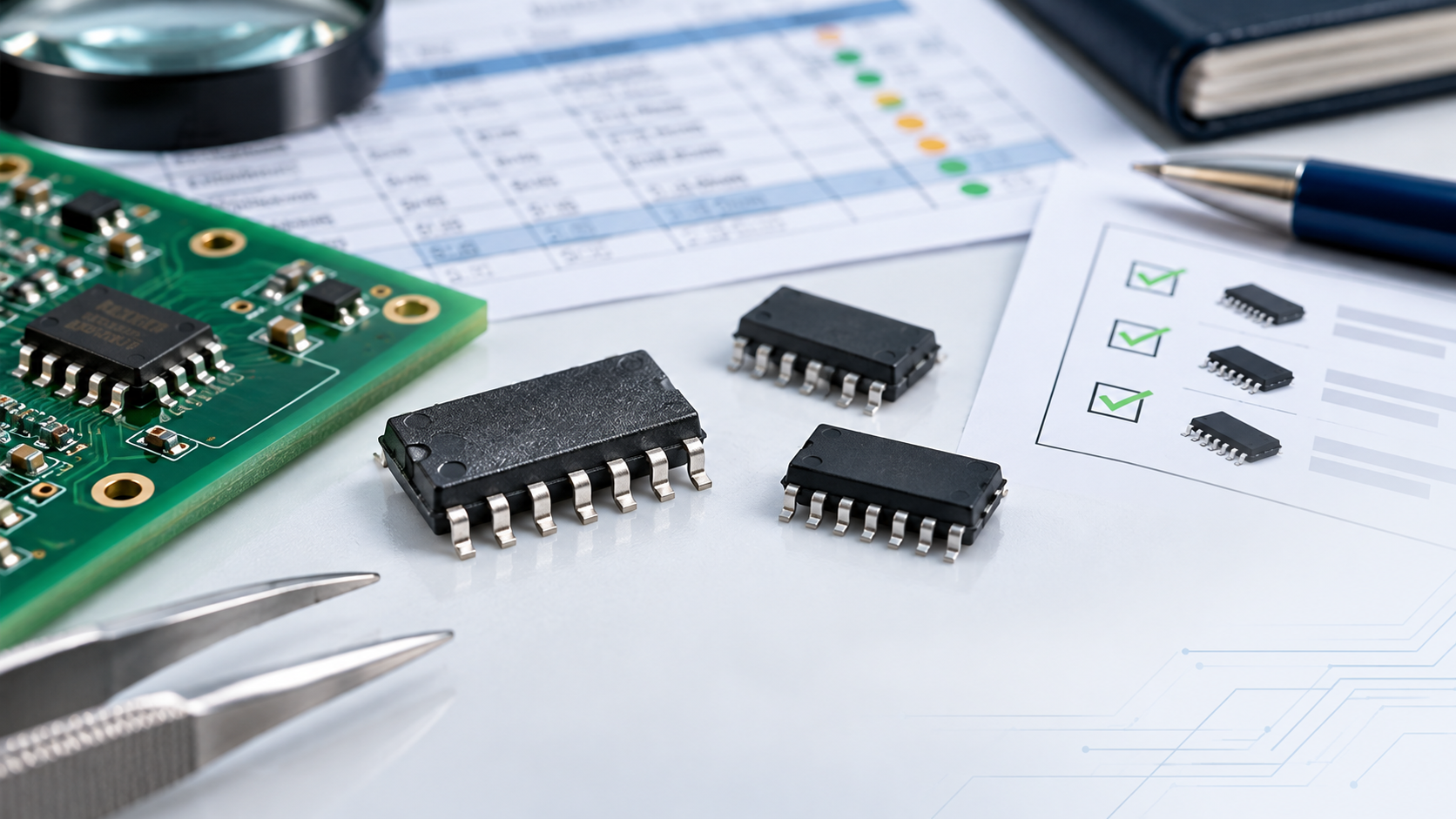
Before approving either device, document the supply rails, signal directions, driving devices, receiver loading and required timing. Then compare those requirements with the relevant datasheet. This is more useful than selecting a part solely because a module listing labels it “SPI compatible.”
Can you replace one with the other?
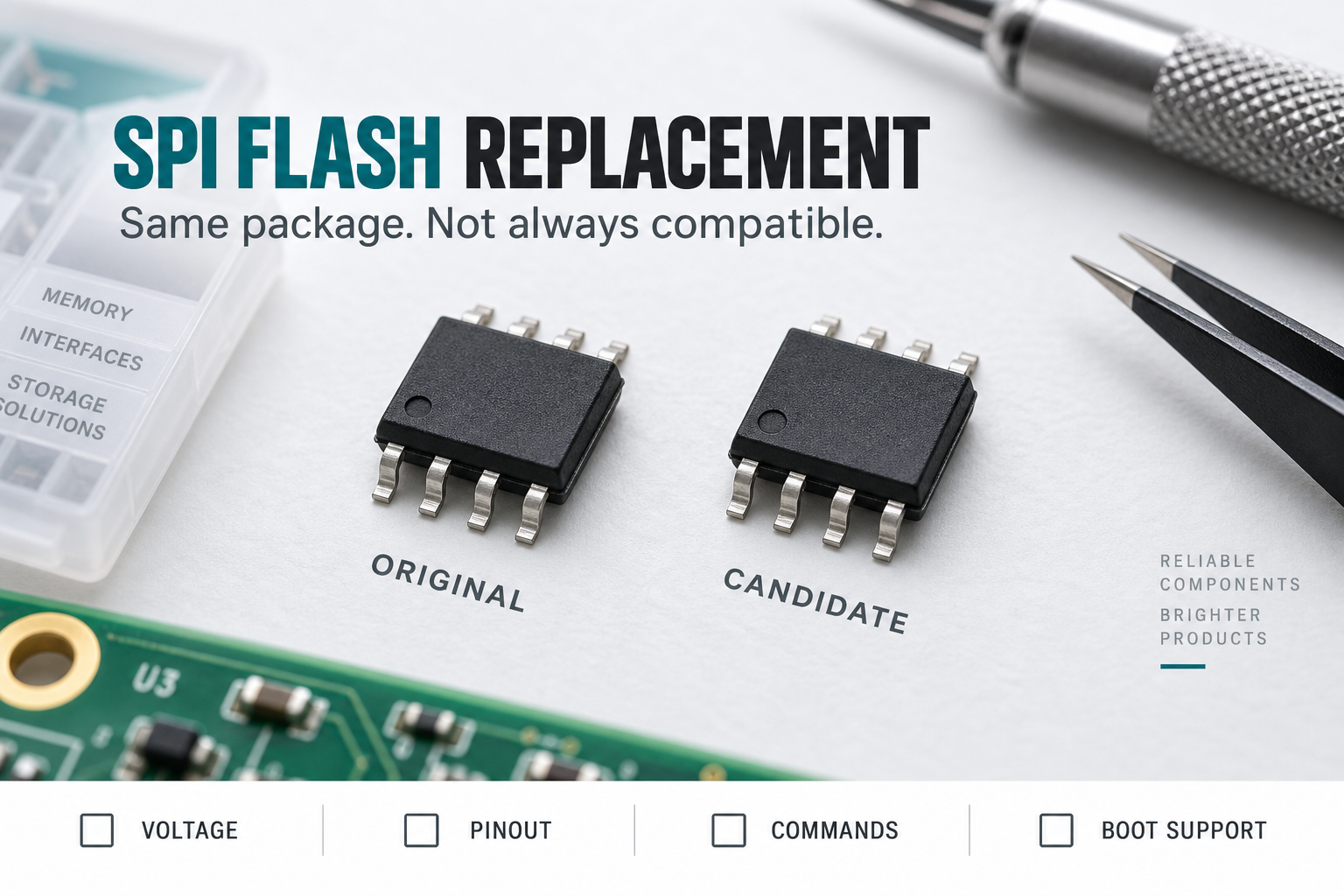
There is no blanket drop-in replacement rule. The lower A-port voltage limit differs, and the pull-resistor and driver requirements differ. Check package-specific pin assignments as well as electrical behavior.
For an existing BOM, separate three decisions: whether the replacement fits the board, whether it works electrically, and whether it is approved for production. Passing one does not establish the others.
A purchasing team can request an alternative quotation, but the original and proposed ordering codes should remain distinct until engineering approval is recorded.
When a translated signal does not work
Capture the failure before changing parts. Record the board revision, both supply voltages, interface configuration and the conditions that produce the problem. Compare waveforms at the translator input and output rather than relying only on a software error message.
- No communication: check power, ground connections, OE state and the host/peripheral configuration.
- Unexpected signal levels: compare the actual resistor network and connected drivers with the selected device’s requirements.
- Failure only at higher speed: review measured timing against the applicable datasheet conditions rather than assuming the device is defective.
Changing a component and seeing one successful transaction is useful evidence, but it is not a complete replacement qualification. Test the operating conditions relevant to the finished product.
Specify the complete part number when requesting a quote
If your approved BOM calls for TXS0108EPWR, include that full ordering code rather than requesting an unspecified eight-channel level shifter. State the quantity, required delivery date and whether alternatives may be proposed separately.
For a replacement enquiry, include the original part number and the relevant interface requirements. Do not accept a TXB0108 quotation as equivalent simply because the names look similar.
For several components, our OEM BOM procurement guide explains how to organize the enquiry. You can send EASYIEE your component list for a sourcing review. Pricing, availability and delivery require confirmation for the exact part and quantity.