 2026-07-08
 Electronic Components Sourcing Guide for OEM Procurement Teams
Electronic components sourcing is no longer only about finding the lowest unit price. For OEM, EMS, industrial automation, energy storage, EV charger, and power electronics projects, sourcing decisions affect production schedules, component reliability, BOM cost, lifecycle risk, and delivery stability.
When a BOM includes semiconductors, memory ICs, MOSFETs, rectifier diodes, optocouplers, connectors, sensors, and power management components, procurement teams need more than a simple product search. They need accurate part matching, reliable supplier verification, alternative sourcing options, and fast RFQ response.
Why Electronic Components Sourcing Matters for OEM Projects
For small prototype purchases, a buyer may only need a few line items. For production BOMs, the challenge is different. A single unavailable IC, MOSFET, optocoupler, or rectifier diode can delay the whole build. That is why OEM procurement teams often search for an electronic components sourcing partner instead of buying every part one by one.
A strong sourcing process helps reduce three common risks: wrong part matching, unstable supply, and hidden delivery delays. This is especially important for industrial control boards, power conversion systems, battery management systems, EV charging modules, and embedded devices where component substitutions must be reviewed carefully.
What Buyers Usually Need During Component Sourcing
Exact Manufacturer Part Number Matching
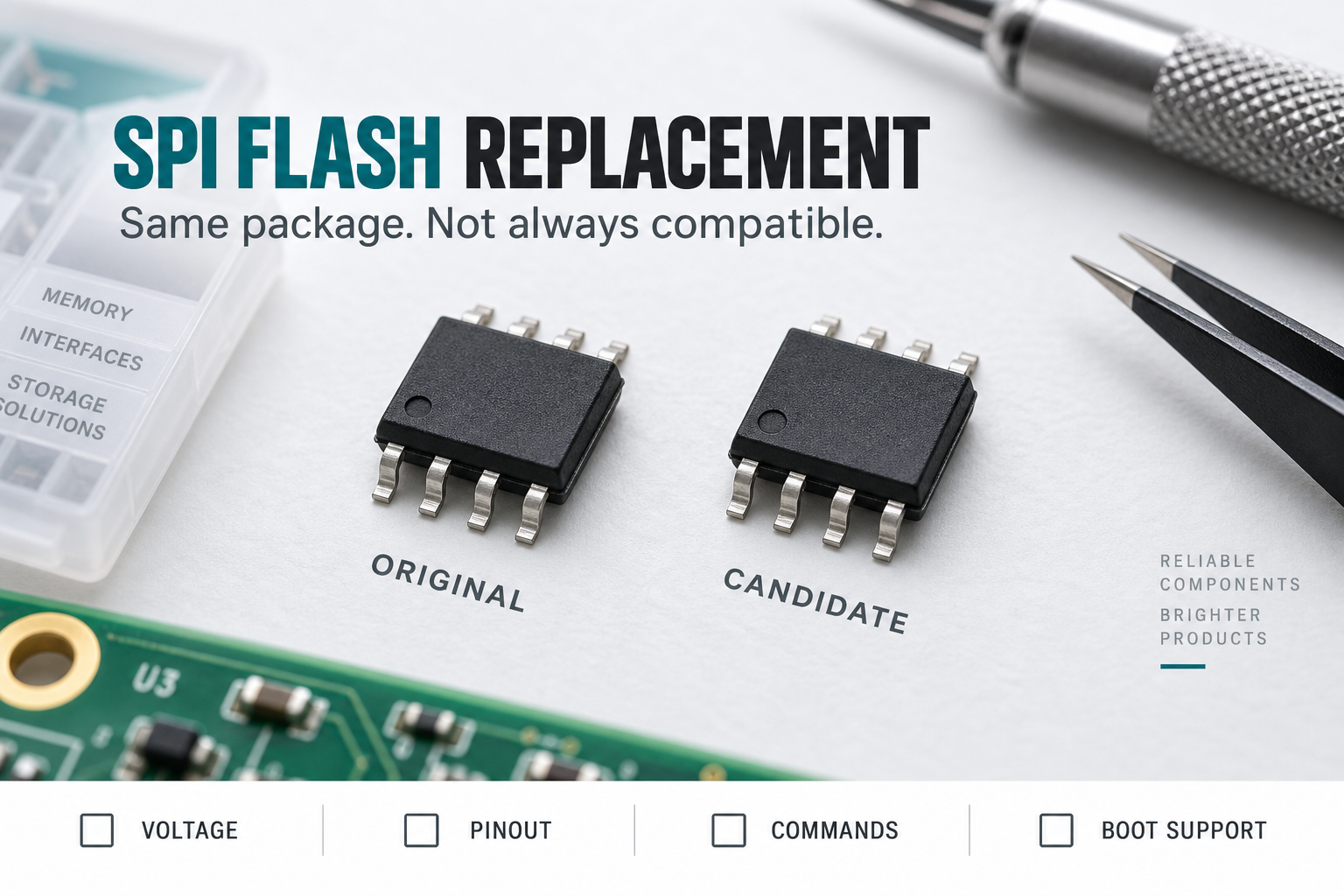
Procurement teams often search by full model number, such as MURS120T3G, SI4362DY-T1-E3, IS25WP080D-JNLE, or IS25LP128F-JBLE-TR. The full part number matters because package, packing type, temperature grade, and suffix can affect compatibility.
BOM Line Review
A BOM may include hundreds of components across different categories. Sourcing teams need to confirm manufacturer, package, quantity, lead time, and available alternatives before issuing a purchase decision.
Hard-to-Find Component Support
Some components are difficult to locate because of shortage, lifecycle changes, obsolete status, regional stock limits, or project-specific approved vendor lists. See also: How to Source Hard-to-Find Electronic Components Without BOM Delays.
Application-Based Sourcing
Industrial automation, EV charger, energy storage, and solar inverter projects often need components selected by real application needs, not only by part category.
Core Component Categories in Electronic Components Sourcing
| Component Category | Common Use | Related EASYIEE Guide |
|---|---|---|
| SPI NOR Flash Memory | Firmware storage, boot code, embedded systems, industrial controllers | SPI NOR Flash Memory Sourcing Guide |
| MOSFETs | Power switching, motor control, DC/DC converters, industrial power modules | MOSFET Sourcing Guide |
| Rectifier Diodes | Power supplies, inverter circuits, reverse protection, fast recovery circuits | Ultra Fast Rectifier Diode Selection Guide |
| Optocouplers | Isolation, PLC I/O, gate drive circuits, signal transfer between voltage domains | Optocoupler Selection Guide |
| Industrial and Power Electronics Components | Automation systems, EV chargers, energy storage, solar inverters | Industrial Automation Components Guide |
How to Build a Reliable Electronic Components Sourcing Workflow
1. Start with the Full Part Number
The full manufacturer part number is the best starting point. Do not shorten the model number when requesting a quote. Suffixes often indicate package, reel type, lead-free status, operating temperature, or packing method.
2. Confirm Brand, Package, and Key Parameters
For production purchasing, the part number should be checked against brand, package, voltage/current rating, memory density, interface, mounting style, and operating temperature. This helps avoid mismatches between similar-looking models.
3. Separate Exact-Match Items from Flexible Items
Some BOM lines must be exact-match because they are locked by design validation. Other line items may allow alternates. Marking this clearly helps the sourcing team respond faster and avoid unnecessary delays.
4. Check Availability and Delivery Risk Early
Long lead time parts should be reviewed first. For projects involving power electronics, industrial controls, battery systems, or embedded modules, early sourcing review can reduce last-minute production risk.
5. Use RFQ for Multi-Line BOM Procurement
If your BOM includes many line items, a structured RFQ is usually more efficient than searching one product at a time. EASYIEE supports electronic components sourcing and BOM procurement for OEM projects. You can visit Services or Contact Us to send your BOM or part list.
Electronic Components Sourcing by Application
Different applications have different sourcing risks. A memory IC for an embedded controller, a MOSFET for a power module, and an optocoupler for an isolation circuit should not be evaluated with the same checklist.
- Industrial automation: focus on lifecycle, temperature range, reliability, and replacement stability. Read: Industrial Automation Components Sourcing Guide.
- EV charger systems: focus on power switching, isolation, protection, and long-term supply. Read: EV Charger Components Sourcing Guide.
- Energy storage systems: focus on BMS, signal isolation, current sensing, power conversion, and protection parts. Read: Energy Storage Components Sourcing Guide.
- Solar inverter projects: focus on MOSFETs, rectifiers, gate drive isolation, control ICs, and power semiconductors. Read: Solar Inverter Components Sourcing Guide.
When to Use a Sourcing Partner Instead of Searching Alone
A sourcing partner is useful when the BOM is large, the part is hard to find, the project has strict brand requirements, or the buyer needs quick confirmation before production. This is also helpful when procurement teams need support across multiple manufacturers and product categories.
If your team is comparing suppliers, you may also read How to Choose an Electronic Components Distributor for OEM Sourcing. If your project starts from a complete BOM, read BOM Sourcing Guide for OEM Electronic Components.
Recommended RFQ Information
| RFQ Field | Why It Helps |
|---|---|
| Manufacturer Part Number | Allows exact matching and avoids confusion between similar models. |
| Manufacturer / Brand | Confirms approved source and prevents incorrect substitutions. |
| Quantity | Helps check price breaks, available stock, and delivery options. |
| Target Delivery Date | Helps prioritize urgent production or repair requirements. |
| Accepted Alternatives | Speeds up sourcing when exact parts are limited or obsolete. |
FAQ: Electronic Components Sourcing
What is electronic components sourcing?
Electronic components sourcing is the process of finding, verifying, quoting, and purchasing electronic parts based on exact part number, manufacturer, package, specification, quantity, and delivery requirements.
Is BOM sourcing different from component sourcing?
Yes. Component sourcing can focus on one part number, while BOM sourcing covers multiple line items in a complete bill of materials. BOM sourcing usually requires part matching, stock checking, alternative review, and multi-line quotation.
Can EASYIEE help with hard-to-find electronic components?
Yes. EASYIEE supports sourcing for standard, hard-to-find, and project-based electronic components. Buyers can send part numbers, quantities, and BOM lists for review.
Should I search by product model number?
Yes. For electronic components, the product model number is often the strongest keyword and the most accurate sourcing identifier. Full part numbers help match the exact brand, package, and technical specification.
Need Help with Electronic Components Sourcing?
If you are sourcing semiconductors, MOSFETs, memory ICs, optocouplers, rectifier diodes, industrial automation components, or a complete OEM BOM, EASYIEE can help check availability and provide RFQ support.
Browse Products | View Services | Browse Manufacturers | Send RFQ
Related EASYIEE Guides
- BOM Sourcing Guide for OEM Electronic Components
- How to Source Hard-to-Find Electronic Components Without BOM Delays
- How to Choose an Electronic Components Distributor for OEM Sourcing
- MOSFET Sourcing Guide for Industrial Control and Power Electronics
- SPI NOR Flash Memory Sourcing Guide for Embedded Systems