 2026-11-16
Before buying industrial control components, make sure the offers cover the same part, condition, documentation and delivery commitment. Otherwise, the lowest price may be for something your engineering or quality team cannot approve.
First, confirm what you are actually buying
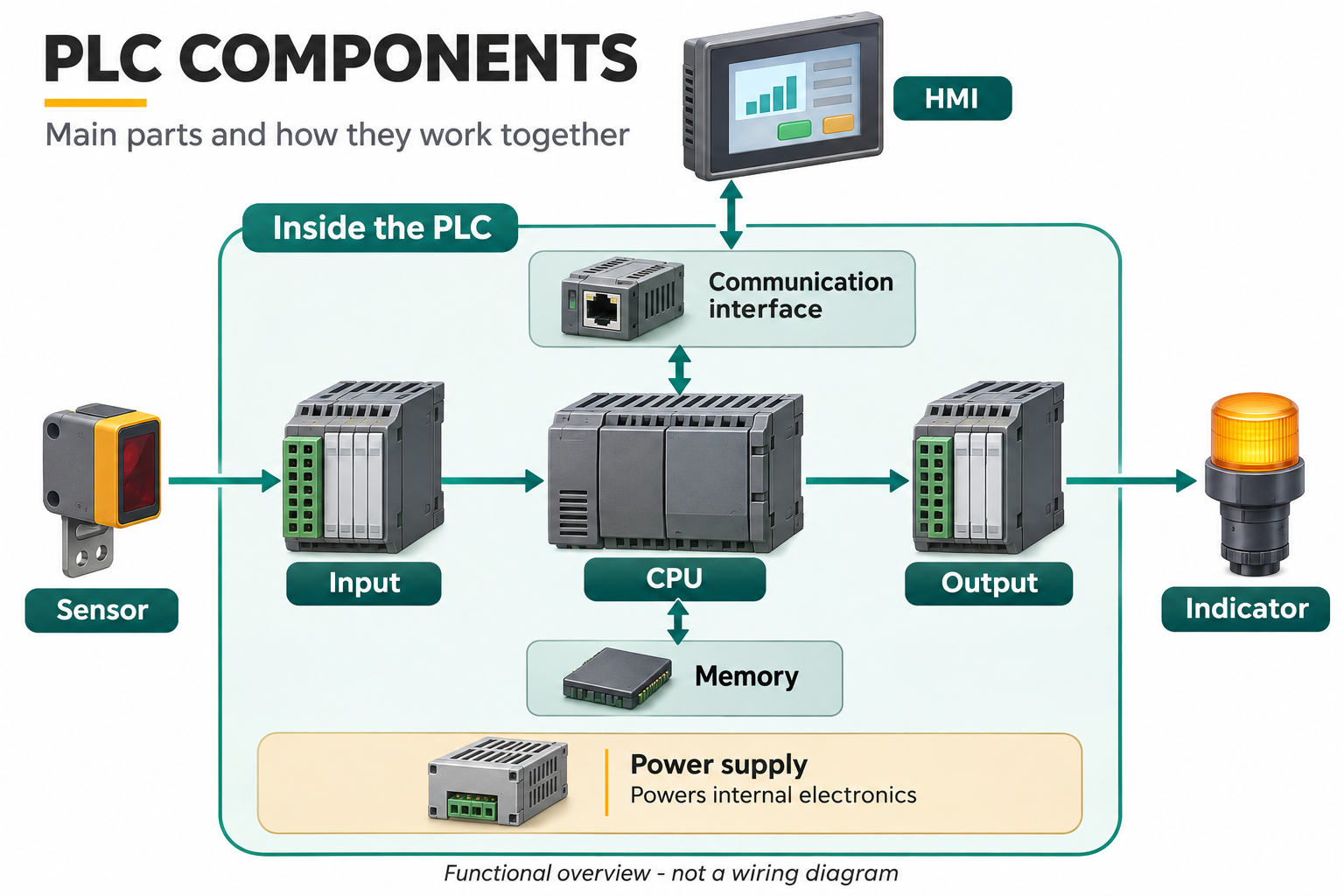
“Industrial control components” can mean complete PLC modules, contactors and panel power supplies. It can also mean the ICs, optocouplers, power semiconductors and passive components mounted on a control board. These are different purchasing tasks.
This guide focuses on board-level electronic components for industrial equipment. Buying a chip does not replace a complete module, and a matching package does not establish compatibility. If you need help identifying the functional groups in a BOM, start with our industrial control board component guide.
Get the exact orderable part number into every quotation
A short chip marking or a product-family name is not enough to release a purchase order. Ask each supplier to quote the manufacturer and full orderable part number, including suffixes. Depending on the manufacturer, those suffixes may identify package, temperature grade, packing format or another option. Read the ordering information rather than guessing what a suffix means.
Keep the requested part number and the offered part number in separate columns. If they differ, flag the line for review. Do not let a spreadsheet update silently turn a proposed alternative into the approved part.
The same discipline applies when browsing an integrated circuit catalog: use the listing to locate candidates, then reconcile the exact variant with the manufacturer’s documentation and your approved BOM.
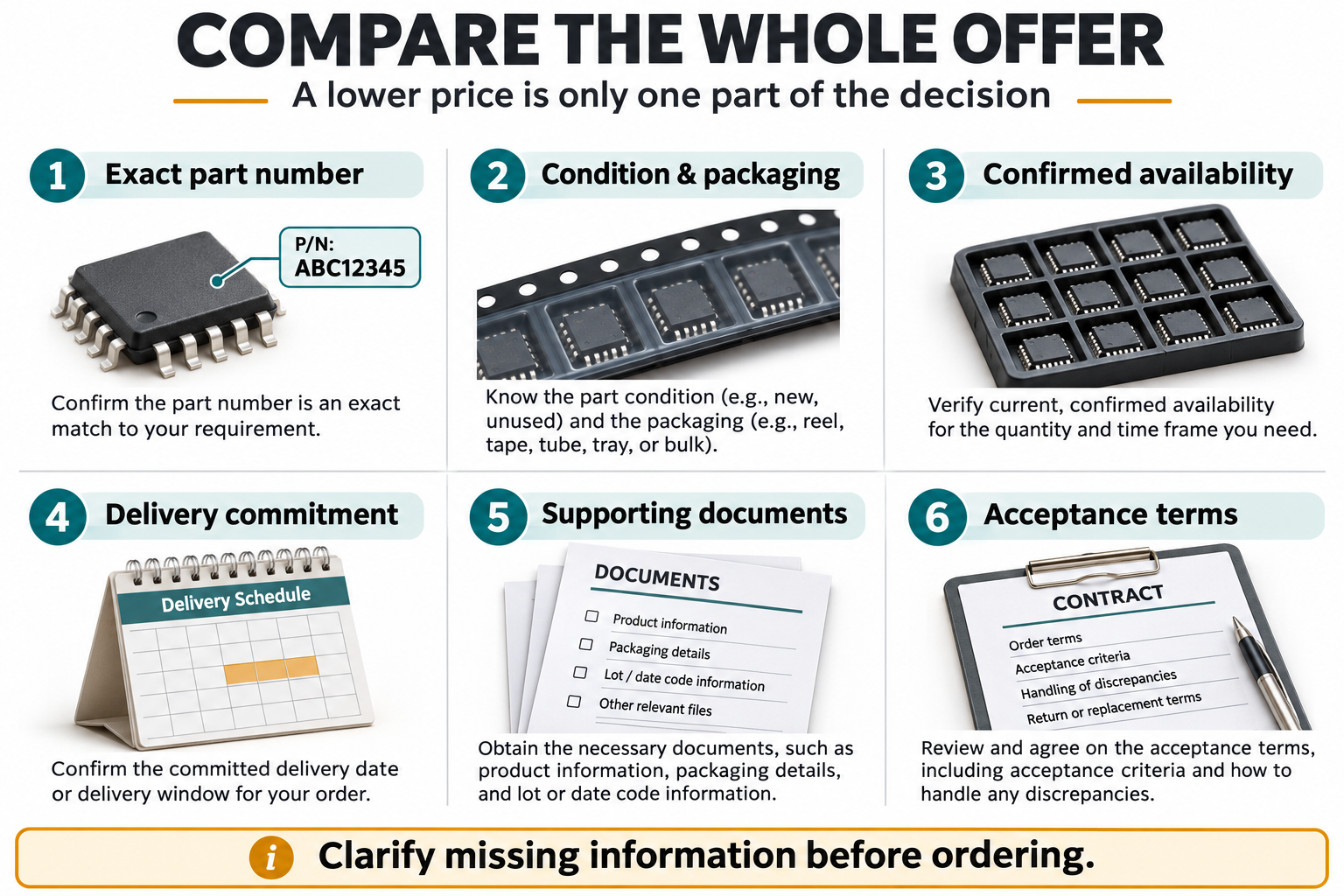
Compare quotes on more than unit price
| Quote item | Ask the supplier to confirm | If the answer is unclear |
|---|---|---|
| Part identity | Manufacturer, full part number and any proposed deviation. | Hold the line until the exact variant is identified. |
| Condition and packaging | Declared condition, reel or cut-tape format, lot information and available packaging records. | Do not assume “original” means unused or factory-sealed. |
| Availability | Whether stock is held, reserved or dependent on another source. | Treat the stated quantity as unconfirmed. |
| Delivery | Dispatch commitment, destination, shipping basis and quote validity. | Separate an estimate from an agreed delivery commitment. |
| Evidence | What sourcing records, conformity documents or inspection reports are available for the offered lot. | Ask your quality team whether the evidence is sufficient. |
| Acceptance | Inspection window, discrepancy process and return or replacement terms. | Resolve these terms before placing the order. |
For example, imagine two hypothetical offers for the same BOM line. One is cheaper but leaves condition and dispatch timing open. The other identifies the lot and gives a written shipping commitment. That does not automatically make the second offer acceptable, but it gives you more facts to evaluate. First close the evidence gaps; then compare cost.
Keep an exact replacement separate from an alternative
For an approved production BOM, an exact replacement and a substitute should follow different review paths. The purchasing team can collect availability and commercial terms. Engineering should decide whether a different device is suitable for the circuit.
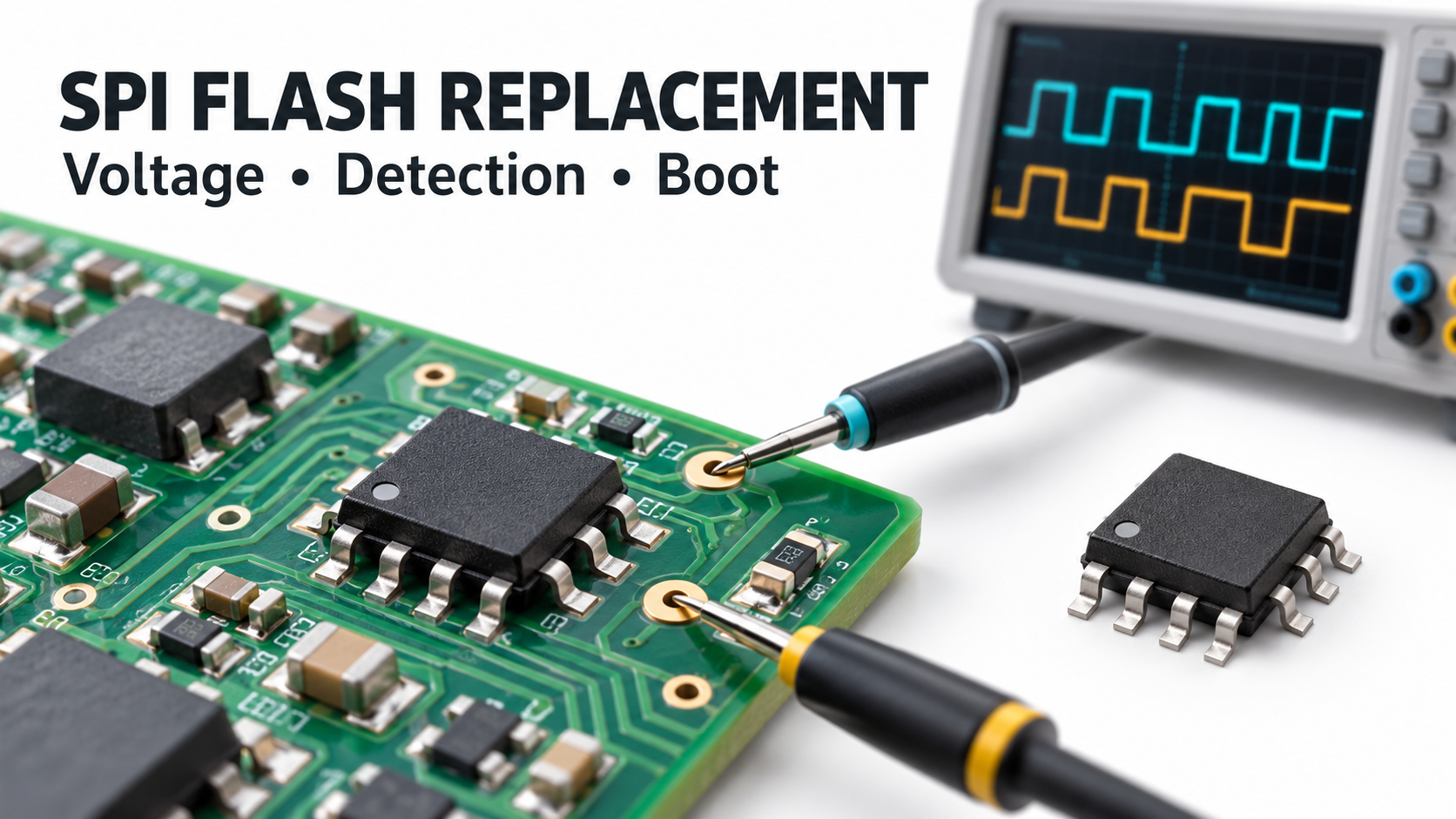
Ask for a side-by-side comparison that identifies differences, not just a statement that the parts are “equivalent.” The relevant checks depend on the component. For an interface IC, the interface behavior matters. For memory, the required commands and operating conditions matter. For an isolation device, a single headline voltage does not describe every requirement.
For example, Texas Instruments’ isolation selection information distinguishes working and withstand isolation voltage, temperature range, package and other characteristics. This is why a larger number in one specification is not enough to approve a replacement.
If your BOM includes optoelectronic components, identify the exact device type before reviewing alternatives. Do not treat a signal optocoupler, a gate-driver optocoupler and another isolation device as interchangeable purchasing categories.
Ask what supports the supplier’s authenticity claim
“Genuine,” “original” and “tested” are claims to clarify, not documents by themselves. Ask what records are available, whether they apply to the offered lot and what the supplier can actually demonstrate.
Manufacturer purchasing policies also matter. TI recommends buying through its authorized sources and warns that convincing labels can appear on counterfeit products. Its policy also states that purchases outside authorized sources do not receive TI warranty coverage or customer support.
Do not assume one manufacturer’s policy applies to every brand. Check the relevant manufacturer’s published channel and warranty terms. Where an independent source is being considered, have your quality team define the evidence and any inspection needed before approval.
If testing is offered, ask which methods will be used, how samples are selected, who performs the work and what the report covers. A photograph or a brief functional check should not be presented as proof of every electrical specification or of the entire lot’s authenticity.
Turn an urgent shortage into a clear purchasing decision
When a machine is down, speed matters. But urgency does not tell a supplier whether a substitute is permitted or whether a partial shipment would help. Put those decisions into the request.
Separate immediate repair quantities from later production demand. State whether split deliveries are acceptable. For a discontinued part, compare the available sourcing route with an engineering-approved replacement or redesign path. Ask the manufacturer for current lifecycle information rather than relying only on an old catalog entry.
For safety-related circuitry, stop short of treating a sourcing recommendation as design approval. Changes need review through the equipment’s applicable engineering and safety process.
Send an RFQ that can produce a usable answer
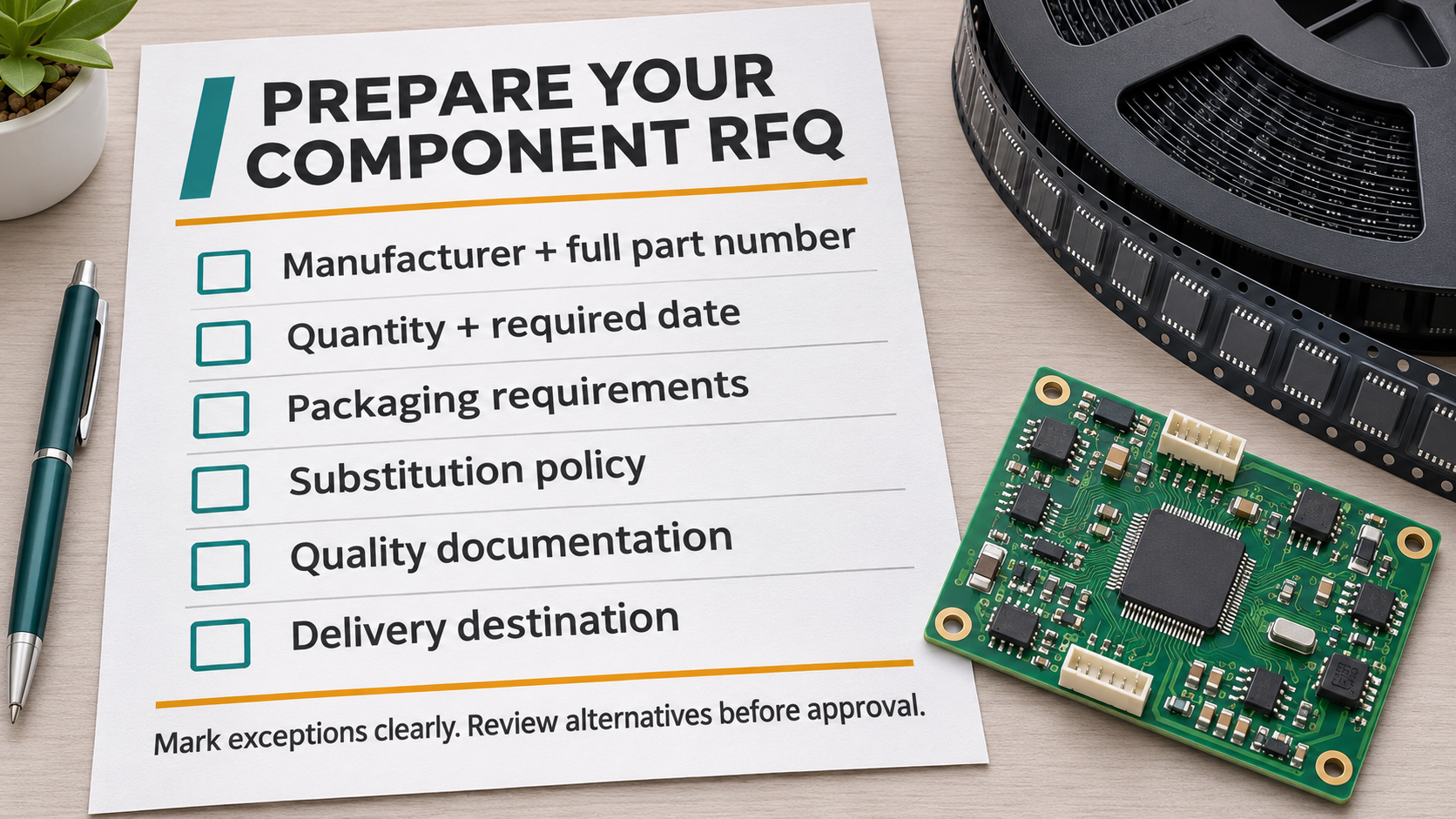
A request for quotation should let the supplier respond to each BOM line without guessing. Include:
- Manufacturer and complete part number: one clearly identified component per line.
- Quantity and timing: immediate need, required delivery date and any later demand.
- Packaging requirements: reel, cut tape or other assembly constraints.
- Substitution policy: exact part only, or alternatives for engineering review.
- Quality requirements: the sourcing records, condition information and inspection evidence your team requires.
- Delivery details: destination and whether partial shipments are acceptable.
Ask the supplier to mark exceptions explicitly. “Unable to confirm” is more useful than an unanswered field that looks like agreement.
Request industrial control component availability
For board-level sourcing, send EASYIEE your part-number list, quantities and required delivery date. Include your packaging constraints and state whether alternatives may be proposed.
Use the response to confirm the offered parts, availability, documentation and commercial terms before ordering. Technical suitability and any substitution should remain subject to your engineering approval.