 2026-06-22
 Gate Driver Optocoupler: What It Does in Industrial Drives and Inverters
Quick Answer: A gate driver optocoupler is a specialized isolation device that combines an optical isolation barrier with a high-current output stage. It is designed to drive the gates of power semiconductors like IGBTs and MOSFETs. Its primary roles are providing galvanic isolation between low-voltage control circuits and high-voltage power stages, and delivering the peak current required for fast switching in industrial motor drives, solar inverters, and EV chargers.
In high-power electronics, the gap between a low-power microcontroller and a high-power motor drive is filled by a critical component: the gate driver optocoupler. As industrial automation pushes for higher efficiency and safety, understanding these devices is essential for any BOM procurement specialist or design engineer.
At EasyIEE, we source a wide range of industrial optocouplers for power electronics, ensuring your supply chain remains resilient even during peak demand.
The Critical Role of Isolation in Industrial Drives
Why can’t a microcontroller drive a motor directly? The answer lies in voltage and safety. Control signals usually operate at 3.3V or 5V, while industrial drives can handle hundreds or thousands of volts. To protect the logic side, we use optocouplers to create a galvanic isolation barrier.
Unlike standard signal-level optoelectronic parts, a gate driver version must also act as a power amplifier. While you might know how a relay works to switch power, an optocoupler does this at nanosecond speeds using light, allowing for the precise Pulse Width Modulation (PWM) required in modern inverters.
How a Gate Driver Optocoupler Works
A gate driver optocoupler consists of three main stages inside a single integrated circuit package:
- Input Stage: An LED that converts the electrical control signal into light.
- Isolation Barrier: A transparent silicone or polyimide layer that blocks high voltage but allows light to pass through.
- Output Stage: A high-speed photodetector and a power amplifier circuit (totem-pole or MOSFET output) that drives the gate of an external IGBT or MOSFET.
Key Applications: From Solar to EV Charging
1. Industrial Motor Drives (Servo & Variable Frequency)
In motor control, these devices switch IGBTs to control speed and torque. Because these systems often include various sensors to monitor current and position, the high-voltage noise from the motor must be isolated to prevent data corruption.
2. Solar Inverters and Energy Storage
Solar inverters convert DC power from panels into AC for the grid. Gate driver optocouplers ensure that the high-voltage DC side doesn’t back-feed into the monitoring and communication modules provided by your microcontroller suppliers.
3. EV Charger Components
Electric vehicle fast chargers require high-speed, high-efficiency switching. Gate drivers with high Common-Mode Rejection (CMR) are vital here to handle the rapid voltage swings (dv/dt) typical of Silicon Carbide (SiC) and Gallium Nitride (GaN) technologies.
Need High-Performance Gate Drivers?
We source industry-leading gate driver optocouplers from brands like Broadcom (Avago), ON Semi, Toshiba, and Renesas. Whether you need 2.5A peak current or high CMR models, we can match your BOM.
Technical Parameters Buyers Must Know
When sourcing these components, don’t just look at the part number. Check these critical specs:
- Peak Output Current (Iop): Usually ranges from 0.5A to 5.0A. Higher current means faster switching for larger IGBTs.
- Common-Mode Rejection (CMR): Measured in kV/µs. High CMR (e.g., 50kV/µs) is required to prevent “false triggering” in noisy industrial environments.
- Propagation Delay: The time it takes for the signal to pass through the chip. For high-speed switching, lower is better.
- Working Voltage (Viorm): The maximum continuous voltage the isolation barrier can withstand.
Sourcing and Replacement Strategy
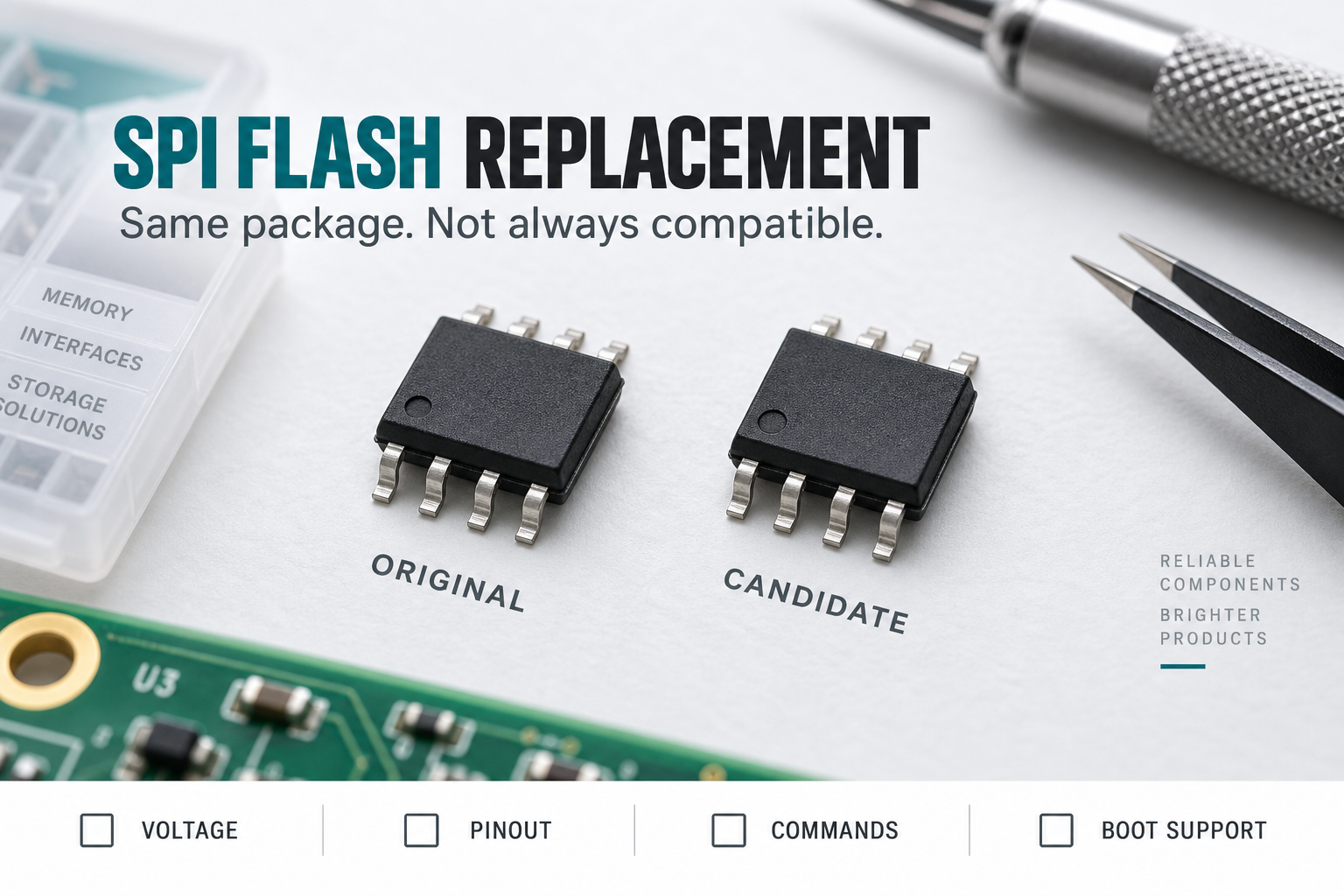
If your preferred gate driver is out of stock, BOM matching can identify drop-in replacements. Many manufacturers follow industry-standard pinouts (like the 8-pin DIP or SO-8 package), making it possible to switch brands without a PCB spin.
However, always verify the Undervoltage Lockout (UVLO) thresholds, as different brands may have slightly different “turn-on” voltages, which can impact system reliability.
Conclusion
Gate driver optocouplers are the unsung heroes of the industrial world, ensuring that power systems remain safe and efficient. By choosing a distributor that understands the technical nuances of isolation and power electronics, you protect both your hardware and your production schedule.
Frequently Asked Questions
What is the difference between a signal optocoupler and a gate driver optocoupler?
A signal optocoupler is designed to transfer data at low currents (mA), while a gate driver optocoupler is designed to provide high peak currents (Amps) to quickly charge and discharge the gate capacitance of power MOSFETs or IGBTs.
Why is high CMR important for gate drivers?
Common-Mode Rejection (CMR) prevents high-frequency noise from the power stage from causing errors in the control stage. In motor drives, rapid voltage changes can cause standard optocouplers to trigger accidentally, leading to short circuits.
Can I replace a standard gate driver with a SiC-optimized gate driver?
Often yes, but SiC (Silicon Carbide) MOSFETs usually require a higher turn-on voltage (e.g., 18V-20V) and have stricter UVLO requirements. Always check the voltage specs before substituting.