 2026-06-23
 Industrial Microcontroller Selection Guide: ARM vs. AVR and Sourcing Best Practices
Selecting the right microcontroller (MCU) is the most critical decision in industrial electronic design. Whether you are building a PLC, a motor controller, or a sensor node, your choice of architecture determines the processing power, power consumption, and long-term supply chain reliability of your product.
At EasyIEE, we don’t just sell parts; we provide technical insights to help you navigate the complex world of industrial automation components.
Foundations: What Is an Industrial Microcontroller?
Before diving into specific models, it is essential to understand the core definition and function of a microcontroller. Unlike general-purpose CPUs, industrial MCUs must operate in harsh environments with high electrical noise, extreme temperatures, and long life cycles (often 10-15 years).
Comparing Architectures: ARM vs. AVR
For decades, two architectures have dominated the industrial landscape: ARM and AVR.
32-Bit Power: The ARM Ecosystem
The ARM microcontroller architecture, specifically the Cortex-M series, is the industry standard for high-performance industrial control. Brands like STMicroelectronics have built legendary lines such as the STM32F series. These chips offer advanced peripherals, high clock speeds, and the versatility needed for servo drive components or solar inverters.
For high-demand applications, designers often turn to high-performance STM32 MCUs to handle complex mathematics and real-time communication protocols.
8-Bit Reliability: The AVR Legacy
While 32-bit chips are powerful, the AVR microcontroller remains a favorite for simpler, highly robust industrial tasks. Known for their predictable performance and ease of programming, AVR chips like the Atmega series are still widely used in industrial control components.
Popular choices include:
- The Atmega128A-AU for data-intensive 8-bit tasks.
- The Atmega8A-AU for compact, cost-effective control.
- The Atmega168PA-AU for ultra-low-power sensing applications.
Key Selection Criteria for Industrial Systems
- Processing Speed: Does the application require real-time signal processing? (Go with ARM).
- I/O Requirements: How many sensors and actuators need to be connected?
- Reliability: Does the chip have built-in watchdog timers and hardware error checking?
- Supply Chain Stability: Can you source this part consistently for the next 5 years?
Running a Production BOM for MCUs?
Our global sourcing network specializes in locating shortage STM32, Atmel, and NXP microcontrollers. Don’t let a missing chip stop your production.
Sourcing Challenges: Managing MCU Shortages
The recent global semiconductor crisis taught us that having a single source is risky. Working with verified microcontroller suppliers is key to maintaining production.
When your primary MPN is out of stock, consider:
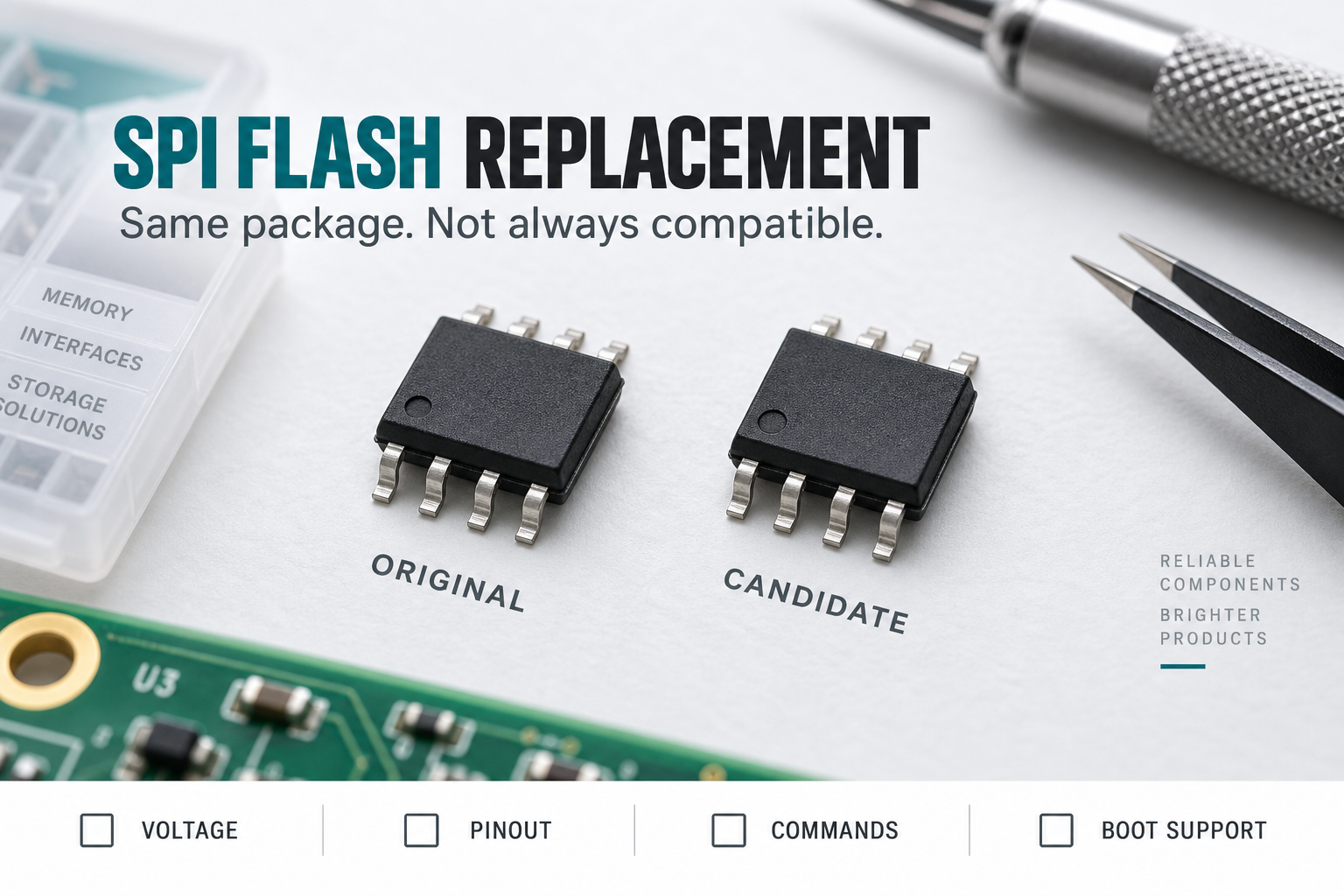
- Drop-in Replacements: Looking for parts with the same package and pinout within the same family.
- Cross-Brand Sourcing: Using our BOM matching service to find equivalent MCUs from alternative manufacturers.
- Regional Stock: Tapping into independent inventories in Hong Kong and Shenzhen.
Conclusion
Whether you choose the raw power of ARM or the rugged simplicity of AVR, your choice of microcontroller must be backed by a strong sourcing strategy. At EasyIEE, we combine technical expertise with global logistics to ensure your industrial automation components are always available when you need them.
Frequently Asked Questions
Is ARM always better than AVR for industrial use?
Not necessarily. While ARM offers more power, AVR is often more robust against noise and easier to implement for simple control tasks. The best choice depends on your software complexity and I/O needs.
How can I find a replacement for a shortage STM32 chip?
You can look for other members of the same family (e.g., swapping an F103 for an F401 if the pinout is compatible) or consult EasyIEE for an equivalent part from a different manufacturer.
What is the lifespan of industrial MCUs?
Most reputable microcontroller suppliers guarantee availability for 10 to 15 years for their industrial-grade lines to match the long lifecycle of factory equipment.