 2026-10-30
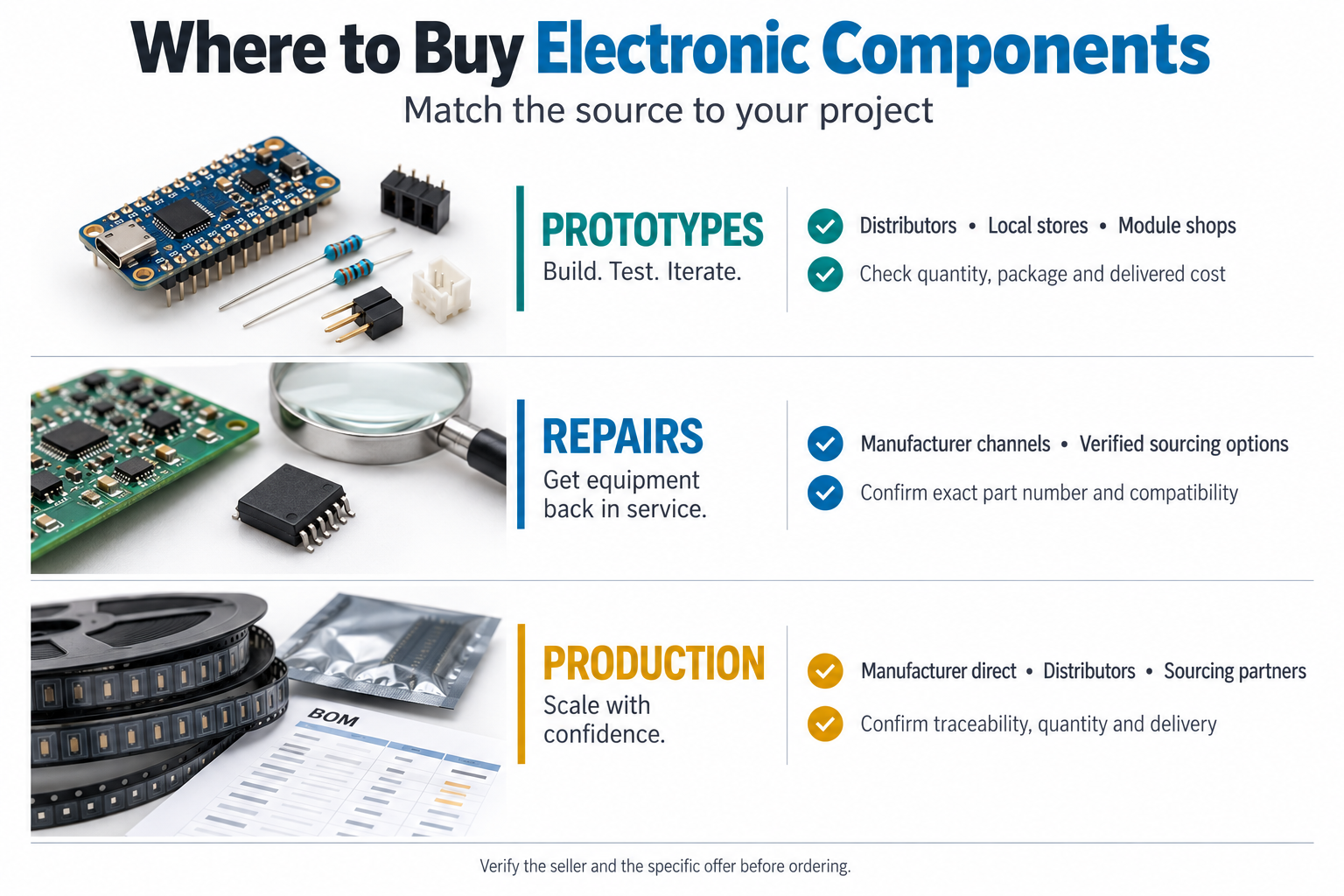
You can buy electronic components from manufacturers, authorized distributors, local electronics stores, specialist module shops, marketplaces and independent suppliers. Those channels do not all solve the same problem. A source that suits a handful of prototype parts may not meet the documentation or delivery requirements of a production order.
Start with what must be supplied. Is the requirement an exact manufacturer part number, a component selected by specification, or a complete development module? Then establish the quantity, acceptable condition, delivery deadline and supporting records. This order avoids choosing an attractive listing before confirming whether it meets the need.
This guide explains how to choose a purchasing route and compare offers. It does not establish the authenticity, availability or suitability of a particular seller’s stock; those questions require evidence for the actual offer.
Define what you need before choosing a seller
An approved BOM and an unfinished design create different buying tasks. If the BOM specifies a manufacturer and complete ordering code, search for that requirement first. If you only know that the circuit needs a voltage regulator or a switching transistor, selection work is still needed. A seller offering something in the right category has not necessarily offered a suitable part.
For a repair, distinguish the full part number from the marking printed on the package. Small devices may carry abbreviated identification codes, date codes or lot markings. A clear photograph can help, but appearance alone may not establish the exact device. Use the equipment documentation, schematic or manufacturer information wherever available.
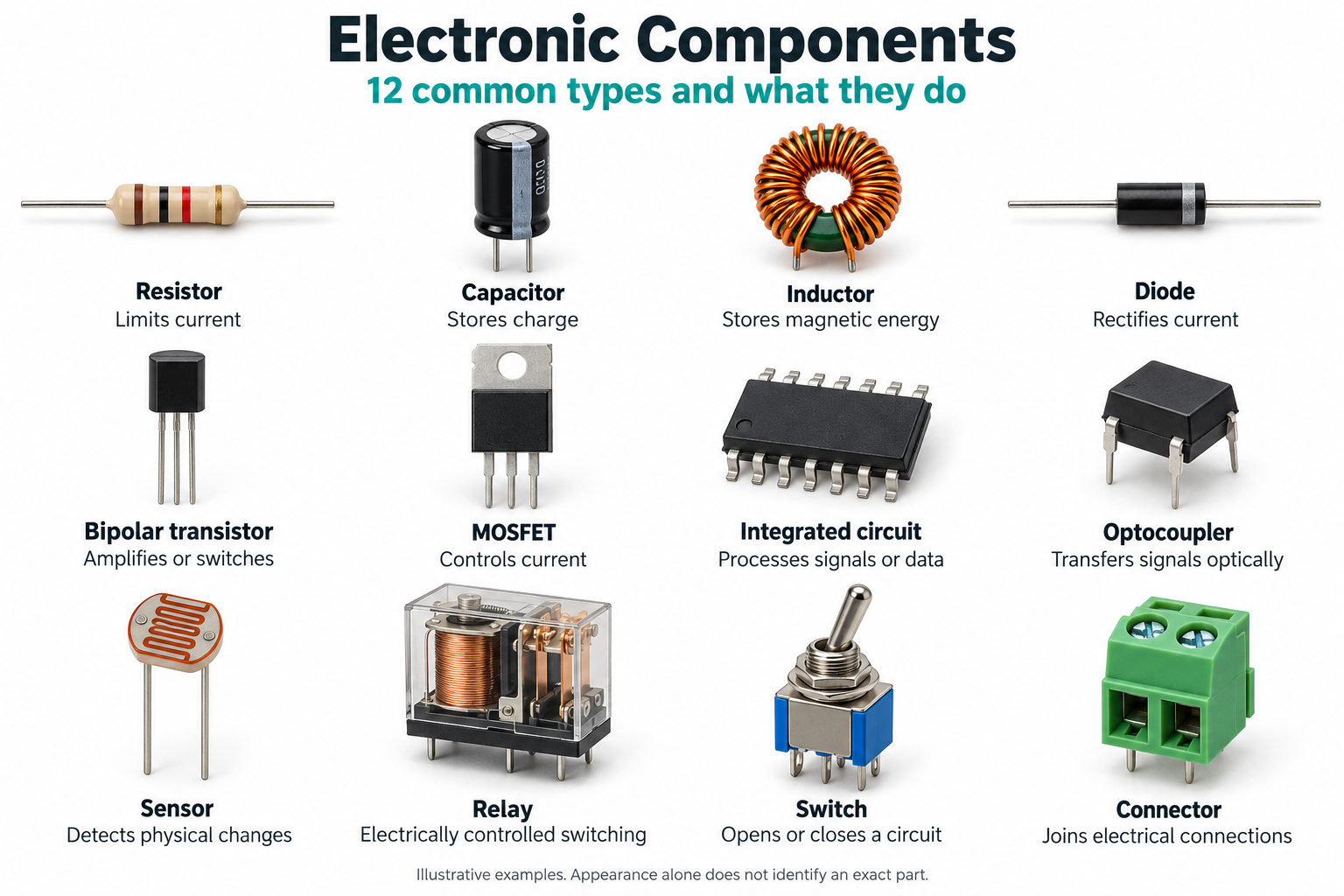
There is also a common purchasing mix-up between components and modules. A sensor breakout board can include a regulator, connectors and supporting resistors. The bare sensor IC does not include those board-level features. Similarly, a microcontroller and a development board built around that microcontroller are not the same purchase.
Finally, decide whether alternatives are allowed. An exact-match request should remain distinct from a request for technically suitable substitutes. Record that distinction before asking for quotations so a supplier does not mistake a proposed alternative for an approved replacement.
Choose a channel that fits the purchase
When deciding where to buy electronic components, compare channels by the job they need to perform. The table below gives starting points, not a universal ranking. Availability, order quantities and service arrangements differ between suppliers and individual listings.
| Channel | When to consider it | What still needs checking |
|---|---|---|
| Manufacturer direct | You know the brand and exact device and want its official ordering route. | Regional sales coverage, ordering options, quantity and delivery. |
| Authorized distributor | You need branded components through a manufacturer-recognized channel. | Authorization for the relevant brand, complete part number and offer terms. |
| Local electronics store | You need common parts quickly or want to inspect an item before buying. | Actual shelf stock, electrical ratings, package and pickup arrangements. |
| Specialist module shop | You need development boards, breakout modules or project kits. | Board revision, documentation, voltage requirements and included accessories. |
| Online marketplace | You are comparing offers from individual sellers. | Seller identity, product condition, source information and fulfillment terms. |
| Independent component supplier | You need additional sourcing options for a shortage, legacy device or mixed requirement. | Lot-specific records, condition, traceability, inspection scope and acceptance terms. |
For an exact branded device, the manufacturer’s website is a useful starting reference even if you buy elsewhere. Check the product information and ordering options, then verify the relevant sales channel. A manufacturer’s logo on a seller’s website is not sufficient evidence of authorization. For example, Analog Devices provides an authorized distributor directory that buyers can consult directly.
Catalogs such as DigiKey and Mouser are examples of places to investigate component categories and ordering options. Use them to narrow a specification, then review the exact item and fulfillment terms. These examples are not a claim that either source is always the cheapest or fastest for every destination.
A local store can be practical for an urgent repair, provided it has the correct item. Call with the requirement before travelling. A store that sells transistors may not have the transistor your board needs. For small prototype orders, compare minimum quantities and delivered cost as well as unit price.
Marketplaces and independent sourcing require attention to the specific seller and lot. A positive review about delivery speed does not establish semiconductor authenticity or electrical compliance. When normal channels cannot meet the requirement, ask what additional source records and verification are available. Our distributor selection guide covers the next stage of evaluating a supplier’s capabilities.
Match the part number, package and supply condition
Two offers can look comparable while describing different purchases. One may refer only to a device family, another to a complete ordering code. One may supply a few pieces in cut tape, while another requires a full reel. Establish that the offers meet the same requirement before comparing prices.
Read the manufacturer’s ordering information for suffixes. Depending on the family, a suffix can identify packaging, package type, temperature grade or another characteristic. Do not assume every difference is merely a reel option, and do not assume every suffix change alters the electrical device.
Physical fit needs its own check. Package name, pin count and dimensions should match the intended footprint, but a matching footprint does not establish matching pin functions or behavior. For connectors, check the mating part and whether contacts or housings are supplied separately. For modules, confirm the board revision rather than relying on a generic photograph.
Clarify the supply condition as well. Terms such as new, surplus, used or recovered describe materially different offers and should be supported by appropriate information. If the project restricts date codes, packaging condition or moisture-sensitive handling, communicate those requirements before the quotation is finalized.
Check source information and delivery commitments separately
A technically correct part can still be an unsuitable purchase if the source evidence or delivery schedule does not meet the project. Treat these as separate questions: what is being supplied, what supports the description, and when can the agreed quantity arrive?
Ask which records accompany the offered material and what they establish. A certificate or inspection report should be relevant to the part and lot, rather than a generic document used to imply more than it demonstrates. Inspection and testing scope should match the application’s requirements; neither a photograph nor a brief electrical check establishes every characteristic of a device.
Delivery language also needs interpretation. A listing may describe stock held by the seller, stock at another location, a factory lead time or an item still subject to sourcing. Confirm the available quantity, dispatch location, expected ship date and any assumptions behind the estimate.
A product page is not a stock commitment. Confirm availability and timing for the exact ordering code and quantity. Dispatch date and arrival date are different, and an estimated schedule should not be treated as a guaranteed delivery.
For discontinued devices, check the manufacturer’s lifecycle information and any authorized aftermarket options before evaluating other sources. The obsolete electronic components guide explains the additional purchasing considerations. A device being available somewhere does not remove the need to approve its source and suitability.
Review the order before payment
The purchase order should preserve the requirement that was evaluated. Compare it with the final quotation, not just the original search result. Check the manufacturer, full ordering code, quantity, packaging, condition and agreed documentation. Resolve substitutions and other changes explicitly rather than allowing them to disappear into a general product description.
Then compare total delivered cost. Unit price alone leaves out minimum quantities, handling charges, freight and applicable taxes or duties. For a small build, buying a full reel can cost more overall than paying a higher unit price for the required quantity. For an urgent order, confirm that the quoted delivery method actually supports the schedule.
Review cancellation, returns and inspection terms before committing. Some offers may be non-cancellable or non-returnable. Agree how discrepancies will be reported and which acceptance checks apply. For safety-critical, regulated or customer-controlled projects, follow the approved source and qualification requirements rather than relying on a general purchasing checklist.
On receipt, check the shipment against the purchase order and retain relevant labels and documents. Resolve unexpected substitutions, quantity differences or condition concerns before releasing the material for use. Traceability is easier to preserve before parts are removed from their original packaging.
Prepare an enquiry that can be quoted accurately
A useful enquiry describes the requirement clearly enough that the supplier does not have to guess. For an exact-match purchase, provide the manufacturer, full ordering code, quantity, destination and required delivery date. Add packaging, condition and documentation restrictions where they matter.
If alternatives are permitted, say whether they are already approved or are only being requested for engineering review. If the device has not been identified, explain that uncertainty and provide available markings and documentation. A speculative identification should not become a confirmed order line by accident.
- Part: manufacturer and complete ordering code.
- Quantity: current requirement and any separate future demand.
- Schedule: required delivery date and destination.
- Supply requirements: packaging, condition, documentation and any relevant restrictions.
- Alternatives: exact match only, approved substitutes or proposals requiring review.
For several line items, use a BOM rather than combining part numbers in a free-text message. The BOM sourcing guide explains how to organize that information. A quotation should distinguish confirmed items, unresolved requirements and proposed alternatives so the buyer can review them separately.
What to send EASYIEE for a sourcing review
If you have an approved part number, browse the electronic component catalog or submit your requirement or BOM. Include the complete ordering code, manufacturer, quantity, destination and required date, along with any source or documentation requirements.
Ask for confirmation of the specific offer’s availability, condition, supporting documents, price and delivery terms. Keep proposed replacements separate from the original requirement until approved. Neither this guide nor a catalog listing establishes the availability or suitability of a particular lot.
Avoid these electronic component buying mistakes
Before releasing the order, make five checks: confirm whether you need a bare part or a module; match the complete ordering code; verify package and application compatibility; review the source and supply condition; and confirm the total cost and delivery terms. These checks are more useful than choosing solely by a familiar seller name or an attractive photograph.
The central decision is practical: choose a source that can meet the actual requirement and provide the evidence the purchase needs. A nearby shop may be right for a common part needed today. A documented manufacturer channel may suit a specified production device. A shortage enquiry may need additional sourcing work and verification.
If the part identity, compatibility or delivery commitment remains unclear, resolve that gap before ordering. The next step is a better-defined requirement, not a faster purchase of something that merely looks close.